The same visible defect may need a completely different solution in a porcelain, acrylic or fiberglass tub. Material identification can save money and prevent an incompatible patch.
For how tub material affects repair and refinishing choices, a sensible plan begins by identifying the existing surface, the condition of the area around the defect and any sign that water is reaching places it should not. This guide explains what can be assessed without damaging the tub, the limits of common treatments, and the questions worth asking before paying for work. Product-specific instructions and an on-site assessment take priority when a coating, fitting or structure is uncertain.
Material determines what can be repaired
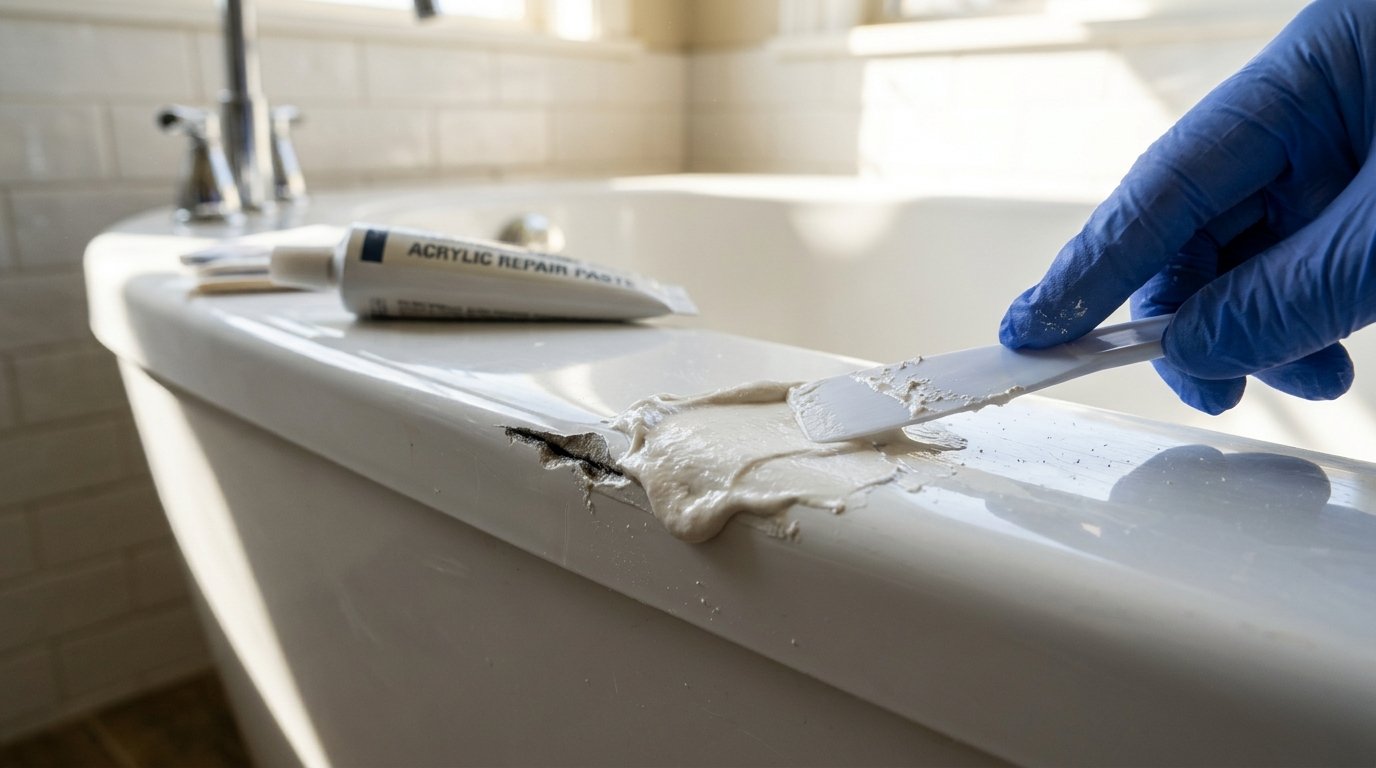
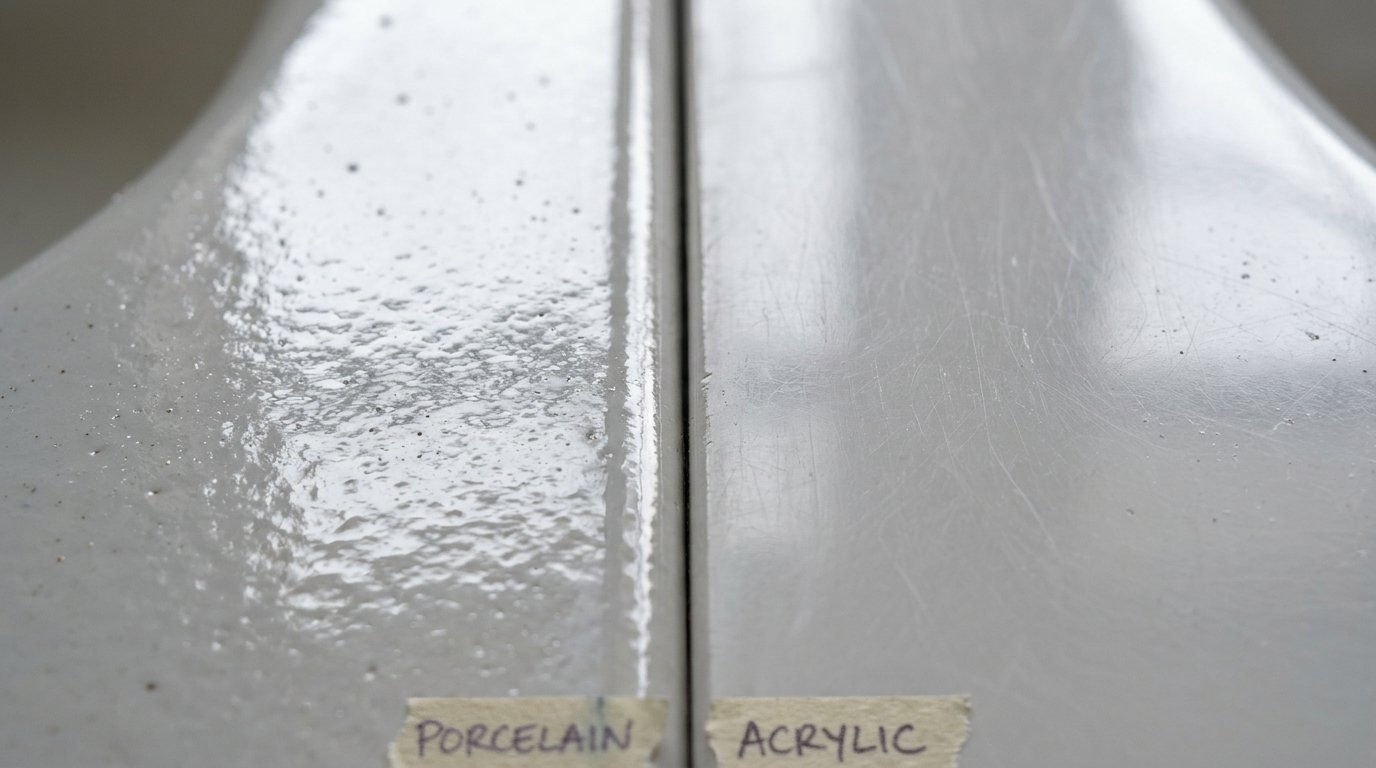
Acrylic scratches, fiberglass laminate cracks and porcelain chips differ mechanically. Name the substrate before selecting any fix. Material compatibility should not be treated as a footnote. Adhesion, hardness, flexibility and chemical tolerance vary, and a product that works well for one bathtub may cause damage on another. Check the maker’s guidance rather than assuming all white surfaces behave alike.
A compatible repair must accommodate surface hardness, expansion, moisture and sometimes flexing. A filler that looks right while dry can perform poorly under repeated heating and use. Ask a technician to explain the observation that supports the diagnosis. “It looks worn” is less informative than a description of adhesion, substrate condition, drain movement or a particular leak path. The explanation should fit the visible evidence.
The safest decision may be to delay cosmetic work until the area is dry and the fittings are sound. A successful finish is easier to achieve when water and movement problems are resolved first.
Surface hardness affects restoration choices
Hard enamel may resist ordinary polishing; softer plastics can scratch more easily. More aggressive treatment is not automatically the better choice. There is also a practical order to the decision. Establish what material is present, whether the bath is dry and secure, and what happened before the mark appeared. Only after that should a proposed cleaning, repair or professional process be judged.
Most routine care should begin with mild, nonabrasive products. Aggressive stain removers, concentrated solvents and heat can cause irreversible harm on some bathing surfaces. Use the least destructive observation available. Look for edges lifting, staining around fixtures, changes in surface texture and accessible damp spots. Leave hidden pipe disassembly and cutting to people equipped to manage the risks.
If there is uncertainty about the substrate or the repair chemistry, do not experiment with a stronger product. Manufacturer guidance or a specialist opinion is generally cheaper than correcting a preventable finish failure.
Flexibility explains many repeat failures
A filler that bonds to rigid porcelain may crack on a moving fiberglass floor. Support defects should be addressed before applying coating. A useful answer balances what you can see with what you cannot. A homeowner can document stains, movement, defects and timing, but hidden plumbing or laminate damage may need inspection tools and someone qualified to use them.
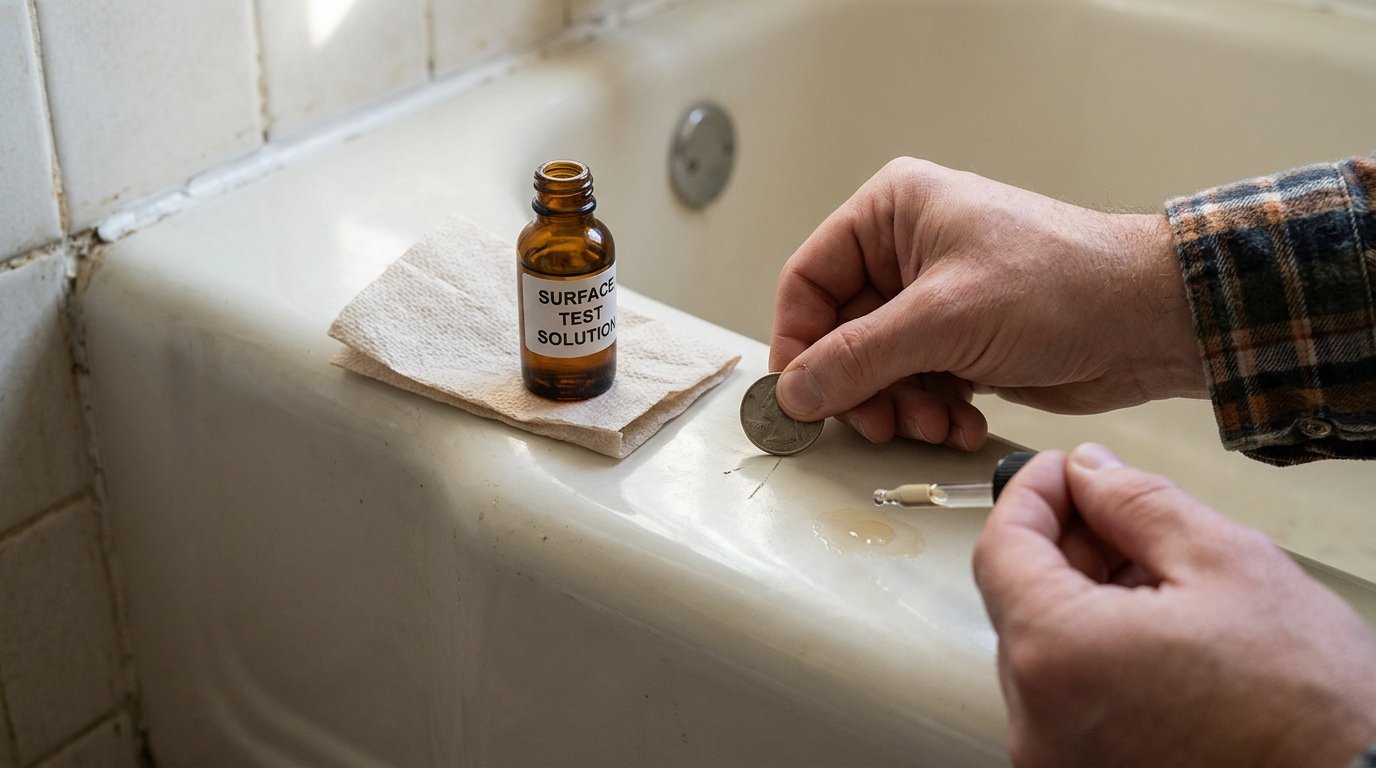
If you cannot positively identify the material, consult the manufacturer or a qualified technician before applying chemicals or sanding. Testing destructively can turn a modest mark into a large repair. Try to distinguish an isolated blemish from a pattern. Several similar defects, recurring moisture or worsening edges make a stronger case for a broader assessment than one stable mark.
Keep records and review the area after normal use resumes. New staining, dampness or lifting edges deserve renewed attention rather than an immediate layer of additional coating.
Exposure and temperature compatibility matter
Solvents, strong acids and heat can harm some bath materials. Follow manufacturer product compatibility guidance and safety data. Consider how this looks in an ordinary bathroom rather than on a product label. The surface may appear uniform from a doorway while the relevant evidence is concentrated near a fitting, seam or damaged edge. Take the time to observe the whole area before making the surface harder to inspect.
Manufacturers use different constructions even within a broad material category. A model number or product manual is more dependable than guesswork based on color and shine. For a useful inspection, photograph the area both close up and from farther back. Note whether the observation changes after a normal cleaning, after the tub is dry or when the fixture has been used. Avoid deliberately stressing a suspected crack or leak.
Allow the specified cure time before using or cleaning a repaired section. Early contact with water or household products can compromise a patch even when it looks hard and glossy.
A useful companion to this question is our guide to Repairing Acrylic Tubs: Common Damage and Best Options, which examines a related decision from a different starting point.
Leak risk may outweigh a perfect finish
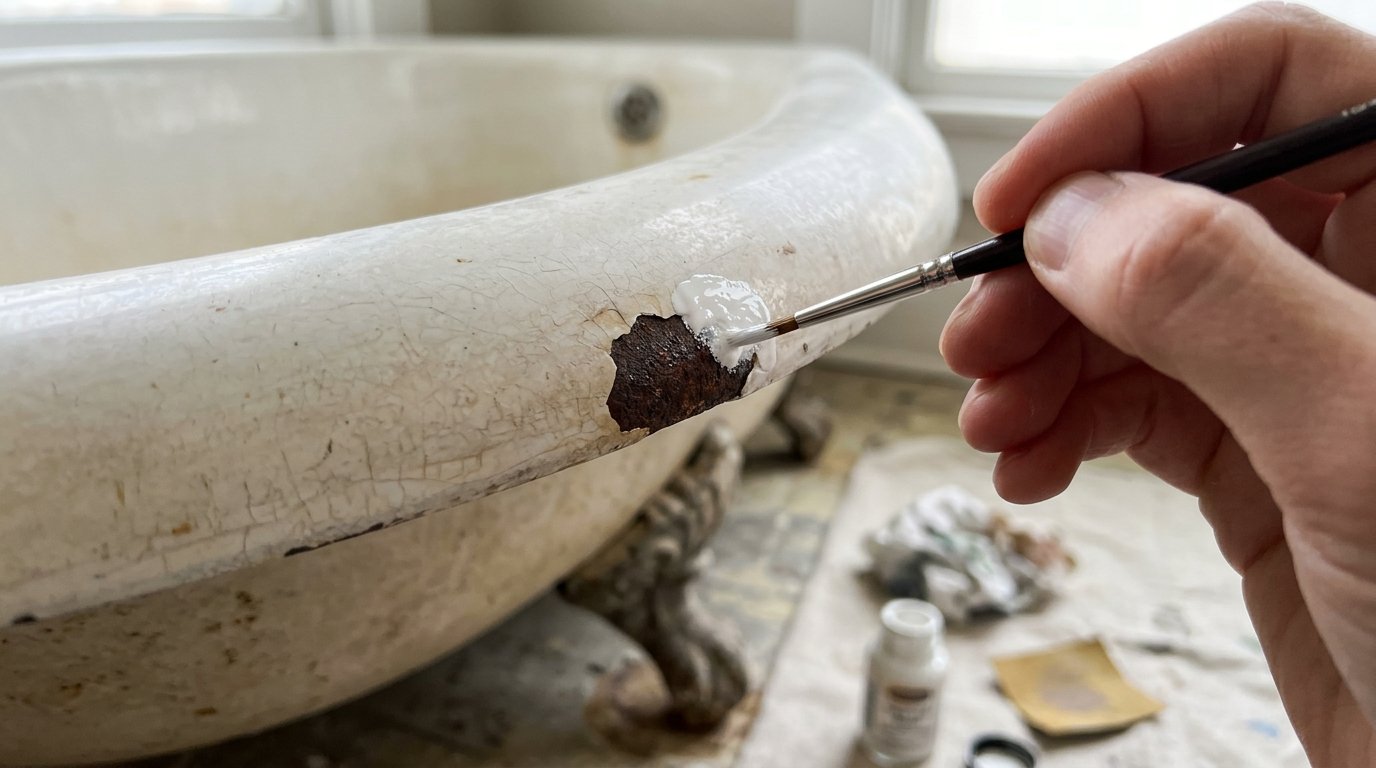
A through-crack or corroded metal opening needs a watertight structural plan. Color matching comes later. Think about the work after the first application as well. Drying, curing, cleaning restrictions and future access may affect whether an approach is practical. A quick fix is less convenient when it needs to be repeated after the next few baths.
Underside access, drain condition and installation bedding can matter as much as the visible finish. When these are uncertain, avoid declaring a tub structurally sound based on photographs. Check the manufacturer’s care instructions and any previous refinishing paperwork. Restrictions about abrasives, solvents, heat or immersion may be specific to the finish rather than to bathtubs generally.
A proposal should state the limits of the work. Cosmetic repairs are not a guarantee against hidden water damage, and resurfacing does not make a flexing or unstable tub structurally secure.
Compare repair with refinishing and replacement
Localized work preserves most of the original finish; refinishing covers a larger surface; replacement changes the entire fixture and often nearby finishes. The location of a problem often changes the stakes. A mark at an edge or fitting may encounter water more often, while a floor defect may be loaded by body weight. That exposure should shape both the urgency of the repair and the method used.
Appearance and durability are separate questions. A small color difference may be acceptable; an unaddressed leak or moving crack should not be accepted simply because it was blended well. A clear stop point is helpful: when you notice an active leak, movement under normal use, exposed sharp material or visible water damage, stop using the bath until the concern has been assessed.
If the surrounding material is sound and the issue is truly localized, a compatible minor repair may be reasonable. If there is spreading damage, repeated failure or moisture below the bath, seek an assessment before covering it.
Build a material-specific maintenance routine
Use mild nonabrasive cleaning as the baseline, then defer to the tub or coating maker for stain and polish exceptions. It helps to separate the visible result from the cause. A smooth patch may look finished, but if movement, contamination or moisture remains, the problem can return. An effective plan explains both the cosmetic treatment and the condition supporting it.
The finish and the structural body are sometimes different layers. Understanding both helps explain why one product can improve appearance without repairing strength or support. Ask what would count as a successful repair. A smooth surface, a well-bonded coating, a dry surrounding wall and a stable tub are separate outcomes; not every technique promises all of them.
Where an inspection finds multiple causes, plan the work in order: address active leakage and instability, dry affected materials, then restore the visible finish. Reversing the order hides evidence.
Applied to “material determines what can be repaired,” this means looking for a genuine change in condition rather than only a change in color. Acrylic scratches, fiberglass laminate cracks and porcelain chips differ mechanically. Name the substrate before selecting any fix. In practical terms, compare the nearby undamaged finish with the affected area, and observe whether the situation stays stable after the space is dry. Do not treat the absence of an obvious drip as proof that a hidden joint or substrate is sound. If a recommendation involves new chemicals, abrasion or removal of fittings, verify that it is suitable for the actual tub and within the intended scope of the product or technician. The goal is an informed decision, not an elaborate experiment on an unknown finish.
Applied to “surface hardness affects restoration choices,” this means looking for a genuine change in condition rather than only a change in color. Hard enamel may resist ordinary polishing; softer plastics can scratch more easily. More aggressive treatment is not automatically the better choice. In practical terms, compare the nearby undamaged finish with the affected area, and observe whether the situation stays stable after the space is dry. Do not treat the absence of an obvious drip as proof that a hidden joint or substrate is sound. If a recommendation involves new chemicals, abrasion or removal of fittings, verify that it is suitable for the actual tub and within the intended scope of the product or technician. The goal is an informed decision, not an elaborate experiment on an unknown finish.
For this particular question, the most useful outcome is a clear distinction between what can safely be checked and what needs skilled attention. Start with the surface and history you actually have, keep water away from suspected leaks, and use only materials approved for the existing finish. If the evidence points to a moving crack, hidden moisture, corrosion or widespread coating failure, a professional diagnosis is worth more than a hurried cosmetic result. Record any work completed, respect the specified cure time and use a gentle maintenance routine afterward.