Before buying cleaners, fillers or coatings, find out what your tub is made of. A few non-destructive observations can narrow the possibilities without risking the surface.
For how to identify your bathtub's surface material at home, a sensible plan begins by identifying the existing surface, the condition of the area around the defect and any sign that water is reaching places it should not. This guide explains what can be assessed without damaging the tub, the limits of common treatments, and the questions worth asking before paying for work. Product-specific instructions and an on-site assessment take priority when a coating, fitting or structure is uncertain.
Start with documents and visible clues
Look for installation paperwork, manufacturer labels, warranty notes or accessible underside markings. Visual appearance alone may not settle the material. Consider how this looks in an ordinary bathroom rather than on a product label. The surface may appear uniform from a doorway while the relevant evidence is concentrated near a fitting, seam or damaged edge. Take the time to observe the whole area before making the surface harder to inspect.
If you cannot positively identify the material, consult the manufacturer or a qualified technician before applying chemicals or sanding. Testing destructively can turn a modest mark into a large repair. For a useful inspection, photograph the area both close up and from farther back. Note whether the observation changes after a normal cleaning, after the tub is dry or when the fixture has been used. Avoid deliberately stressing a suspected crack or leak.
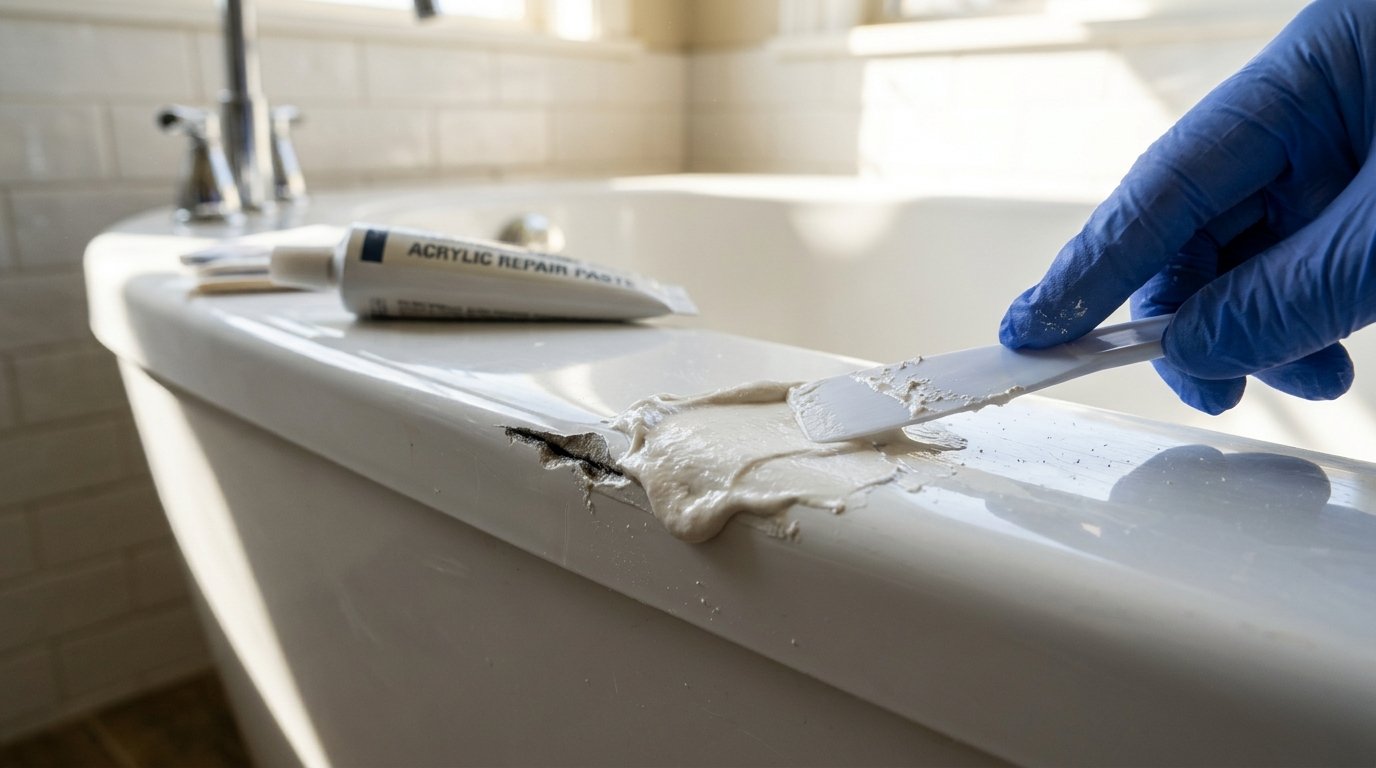
If the surrounding material is sound and the issue is truly localized, a compatible minor repair may be reasonable. If there is spreading damage, repeated failure or moisture below the bath, seek an assessment before covering it.
Use feel and sound as supporting evidence
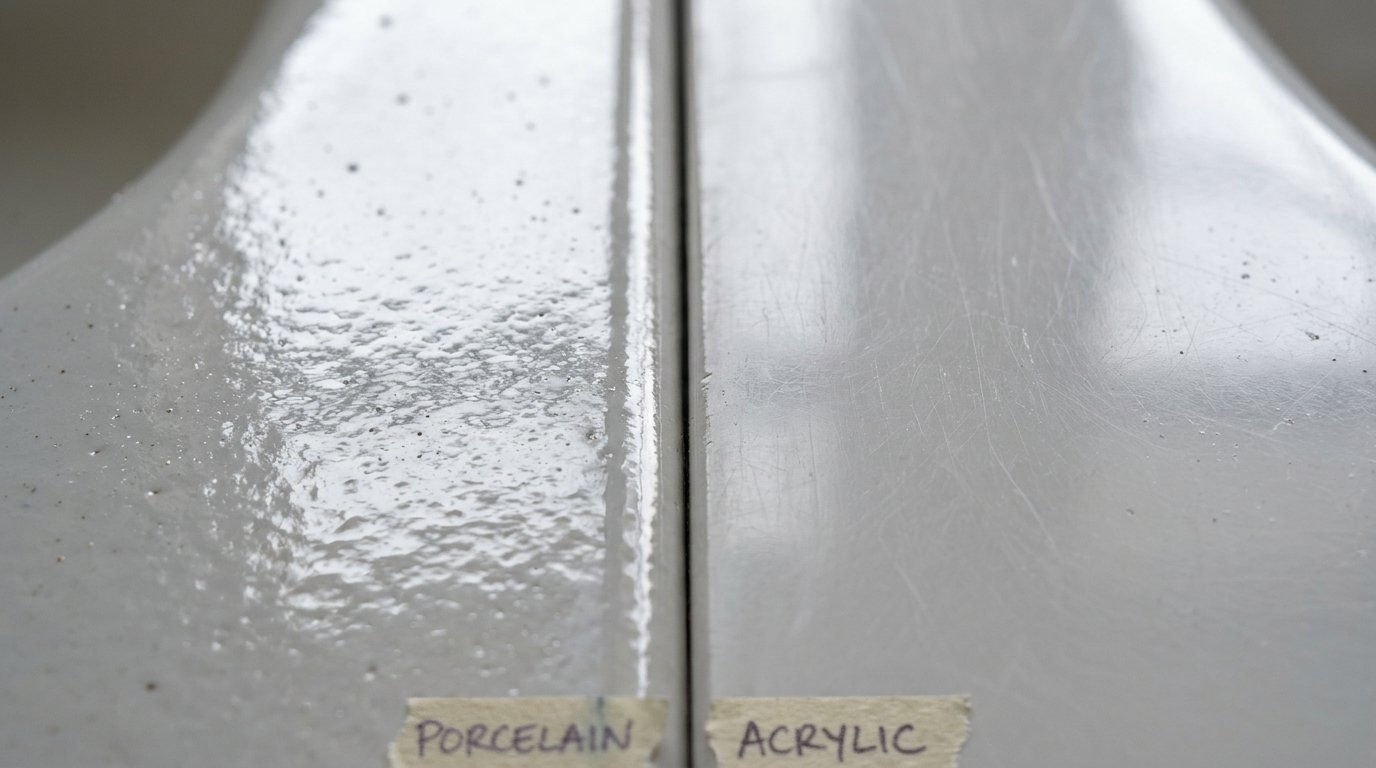
Metal-backed porcelain often feels cooler and more rigid, while acrylic may feel less cold. Room temperature and construction can blur these clues. Think about the work after the first application as well. Drying, curing, cleaning restrictions and future access may affect whether an approach is practical. A quick fix is less convenient when it needs to be repeated after the next few baths.
Manufacturers use different constructions even within a broad material category. A model number or product manual is more dependable than guesswork based on color and shine. Check the manufacturer’s care instructions and any previous refinishing paperwork. Restrictions about abrasives, solvents, heat or immersion may be specific to the finish rather than to bathtubs generally.
Where an inspection finds multiple causes, plan the work in order: address active leakage and instability, dry affected materials, then restore the visible finish. Reversing the order hides evidence.
Look for the finish at exposed edges
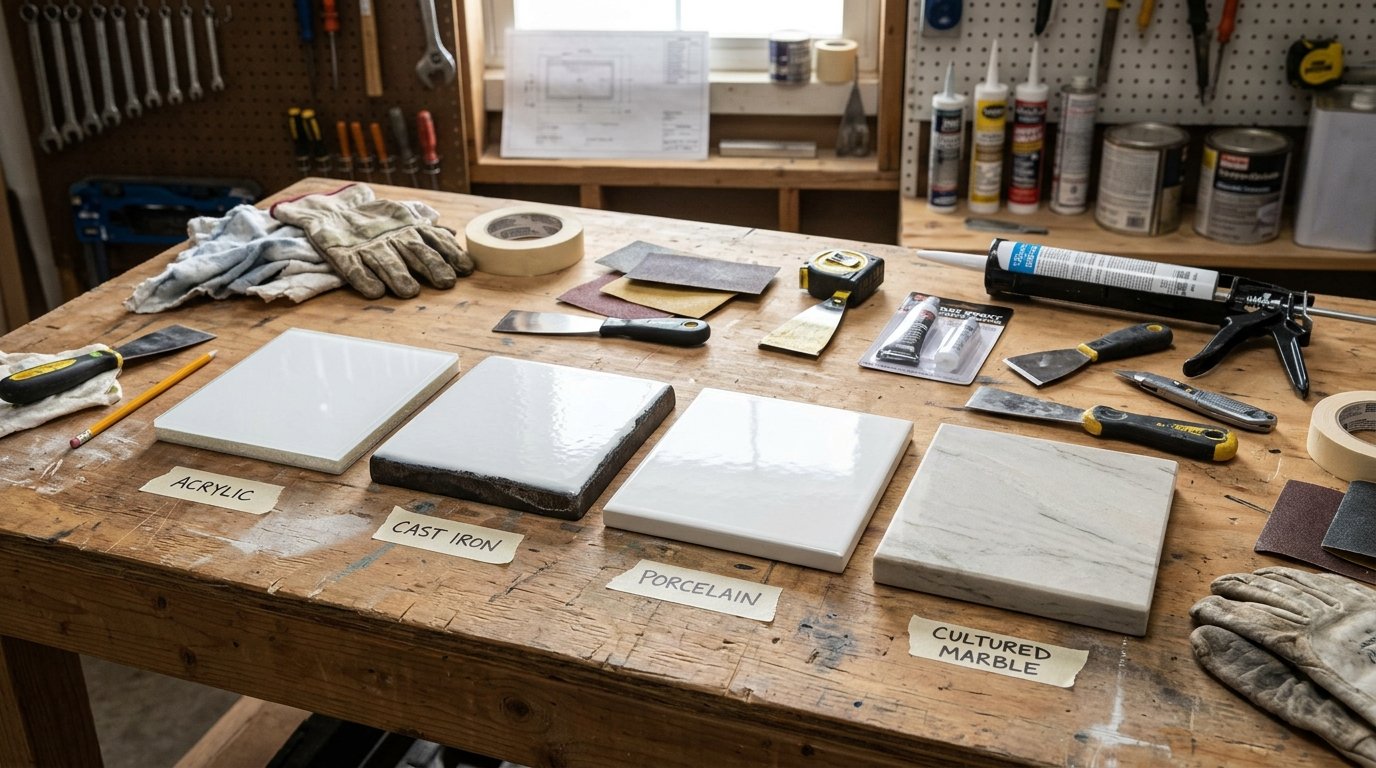
Acrylic shells, fiberglass reinforcement and enamel-coated steel can reveal different layered edges near access panels. Do not pry off finished trim to investigate. The location of a problem often changes the stakes. A mark at an edge or fitting may encounter water more often, while a floor defect may be loaded by body weight. That exposure should shape both the urgency of the repair and the method used.
Underside access, drain condition and installation bedding can matter as much as the visible finish. When these are uncertain, avoid declaring a tub structurally sound based on photographs. A clear stop point is helpful: when you notice an active leak, movement under normal use, exposed sharp material or visible water damage, stop using the bath until the concern has been assessed.
Choose the method that preserves as much sound material as possible. Unnecessary scraping, sanding or chemical treatment can enlarge a modest repair and complicate later professional restoration.
Magnets have limited value
A magnet may stick to enamel-coated steel or cast iron, but not most acrylic and fiberglass. A negative result does not identify which nonmagnetic material you have. It helps to separate the visible result from the cause. A smooth patch may look finished, but if movement, contamination or moisture remains, the problem can return. An effective plan explains both the cosmetic treatment and the condition supporting it.
Appearance and durability are separate questions. A small color difference may be acceptable; an unaddressed leak or moving crack should not be accepted simply because it was blended well. Ask what would count as a successful repair. A smooth surface, a well-bonded coating, a dry surrounding wall and a stable tub are separate outcomes; not every technique promises all of them.
When an option promises to restore appearance quickly, ask whether it also addresses the actual cause. The answer determines whether the result is a durable repair or merely a temporary visual improvement.
A useful companion to this question is our guide to Best Repair Approach for an Old Enamel-Coated Bathtub, which examines a related decision from a different starting point.
Inspect characteristic damage patterns
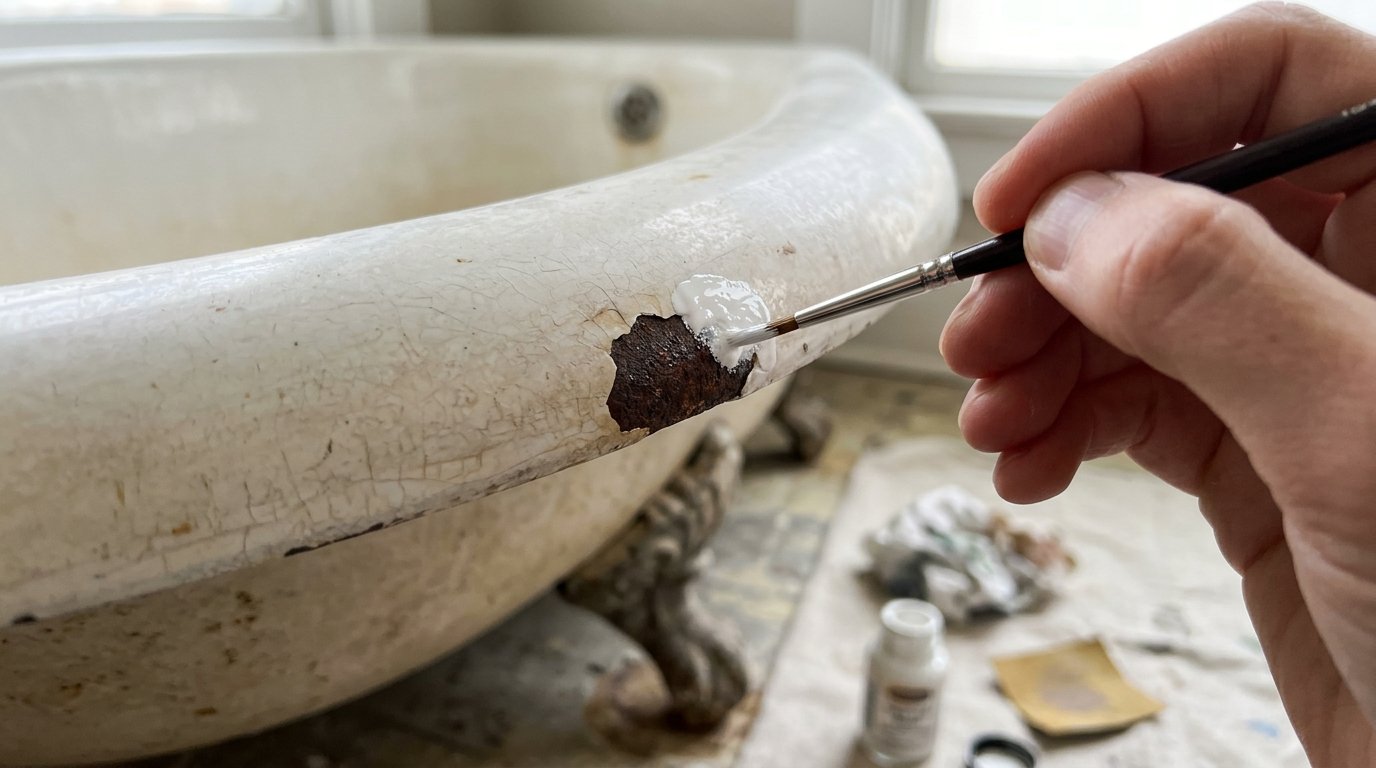
Rust at an enamel chip, spiderweb gelcoat cracking or scratchable acrylic can be informative. Existing refinishing layers may conceal the original finish. When comparing methods, ask what each method is designed to change. Cleaning removes residue, a touch-up improves a small exposed area, refinishing renews a coating, and structural or plumbing work restores a different kind of function.
The finish and the structural body are sometimes different layers. Understanding both helps explain why one product can improve appearance without repairing strength or support. Before making changes, write down what you know: the age of the finish if documented, prior repairs, the exact location and any wetness nearby. Missing information is not a failure; it tells you where to look next.
Before accepting a quote, ask what it includes and how the final result will be checked. A well-defined scope reduces surprises and helps compare alternatives fairly.
Avoid destructive identification tricks
Do not heat, scratch or apply solvent to an unknown bathtub just to test it. Such methods can cause permanent damage or hazardous fumes. The distinction is worth making before buying materials. A product intended to improve appearance may have no role in stabilizing the surface or stopping water. Choosing by the most visible symptom alone can therefore leave the underlying cause untouched.
A compatible repair must accommodate surface hardness, expansion, moisture and sometimes flexing. A filler that looks right while dry can perform poorly under repeated heating and use. If the choice involves a contractor, compare written descriptions of the proposed process. Ask how the work area will be protected, what would change the scope and when the tub may safely return to service.
The safest decision may be to delay cosmetic work until the area is dry and the fittings are sound. A successful finish is easier to achieve when water and movement problems are resolved first.
Use uncertainty as a reason to pause
When the surface remains unclear, provide photos and model information to the manufacturer or specialist before choosing cleaners or repair products. The correct boundary of a project is not always the outline of the visible spot. Damage can extend beneath a finish or into a hidden joint, while some apparent marks are only deposits on top. That difference is the reason inspection comes before treatment.
Most routine care should begin with mild, nonabrasive products. Aggressive stain removers, concentrated solvents and heat can cause irreversible harm on some bathing surfaces. Keep the observations specific rather than using labels such as “bad” or “fine.” Note depth if apparent, exact location, whether water appears, and whether the problem changes over days or weeks.
If there is uncertainty about the substrate or the repair chemistry, do not experiment with a stronger product. Manufacturer guidance or a specialist opinion is generally cheaper than correcting a preventable finish failure.
Applied to “start with documents and visible clues,” this means looking for a genuine change in condition rather than only a change in color. Look for installation paperwork, manufacturer labels, warranty notes or accessible underside markings. Visual appearance alone may not settle the material. In practical terms, compare the nearby undamaged finish with the affected area, and observe whether the situation stays stable after the space is dry. Do not treat the absence of an obvious drip as proof that a hidden joint or substrate is sound. If a recommendation involves new chemicals, abrasion or removal of fittings, verify that it is suitable for the actual tub and within the intended scope of the product or technician. The goal is an informed decision, not an elaborate experiment on an unknown finish.
Applied to “use feel and sound as supporting evidence,” this means looking for a genuine change in condition rather than only a change in color. Metal-backed porcelain often feels cooler and more rigid, while acrylic may feel less cold. Room temperature and construction can blur these clues. In practical terms, compare the nearby undamaged finish with the affected area, and observe whether the situation stays stable after the space is dry. Do not treat the absence of an obvious drip as proof that a hidden joint or substrate is sound. If a recommendation involves new chemicals, abrasion or removal of fittings, verify that it is suitable for the actual tub and within the intended scope of the product or technician. The goal is an informed decision, not an elaborate experiment on an unknown finish.
For this particular question, the most useful outcome is a clear distinction between what can safely be checked and what needs skilled attention. Start with the surface and history you actually have, keep water away from suspected leaks, and use only materials approved for the existing finish. If the evidence points to a moving crack, hidden moisture, corrosion or widespread coating failure, a professional diagnosis is worth more than a hurried cosmetic result. Record any work completed, respect the specified cure time and use a gentle maintenance routine afterward.