A tub can look badly worn and still be structurally sound, while a narrow crack can hint at a serious support issue. A practical assessment looks at behavior, not only surface appearance.
For how to tell if bathtub damage is only cosmetic or structural, a sensible plan begins by identifying the existing surface, the condition of the area around the defect and any sign that water is reaching places it should not. This guide explains what can be assessed without damaging the tub, the limits of common treatments, and the questions worth asking before paying for work. Product-specific instructions and an on-site assessment take priority when a coating, fitting or structure is uncertain.
Surface appearance alone can mislead
A narrow scratch is often cosmetic, but a small line in a heavily loaded area may signal more. Assess texture, location and change over time together. Material compatibility should not be treated as a footnote. Adhesion, hardness, flexibility and chemical tolerance vary, and a product that works well for one bathtub may cause damage on another. Check the maker’s guidance rather than assuming all white surfaces behave alike.
A shiny surface can conceal changes beneath the finish. If there is rust, unusual flex, an opening into the shell, or water where it should not be, cosmetic treatment is not enough. Ask what would count as a successful repair. A smooth surface, a well-bonded coating, a dry surrounding wall and a stable tub are separate outcomes; not every technique promises all of them.
The safest decision may be to delay cosmetic work until the area is dry and the fittings are sound. A successful finish is easier to achieve when water and movement problems are resolved first.
Use the movement clue cautiously
A tub floor that deflects, pops or creaks under normal use may lack support. Avoid loading a tub you suspect is cracked or leaking. There is also a practical order to the decision. Establish what material is present, whether the bath is dry and secure, and what happened before the mark appeared. Only after that should a proposed cleaning, repair or professional process be judged.
Surface products do not all cure in the same way. Water resistance, full hardness, ventilation and cleaning restrictions should come from the specific product instructions. Before making changes, write down what you know: the age of the finish if documented, prior repairs, the exact location and any wetness nearby. Missing information is not a failure; it tells you where to look next.
If there is uncertainty about the substrate or the repair chemistry, do not experiment with a stronger product. Manufacturer guidance or a specialist opinion is generally cheaper than correcting a preventable finish failure.
Examine the edges and surrounding finishes
Spreading lines, sharp delamination and soft adjacent material suggest something deeper. A uniform discoloration without deformation is more likely cosmetic. A useful answer balances what you can see with what you cannot. A homeowner can document stains, movement, defects and timing, but hidden plumbing or laminate damage may need inspection tools and someone qualified to use them.
Visible changes should be documented before a repair. A clear photo of the entire tub and a closer image with an ordinary size reference are more useful than an extreme close-up alone. If the choice involves a contractor, compare written descriptions of the proposed process. Ask how the work area will be protected, what would change the scope and when the tub may safely return to service.
Keep records and review the area after normal use resumes. New staining, dampness or lifting edges deserve renewed attention rather than an immediate layer of additional coating.
Look beneath and beside the bathing surface
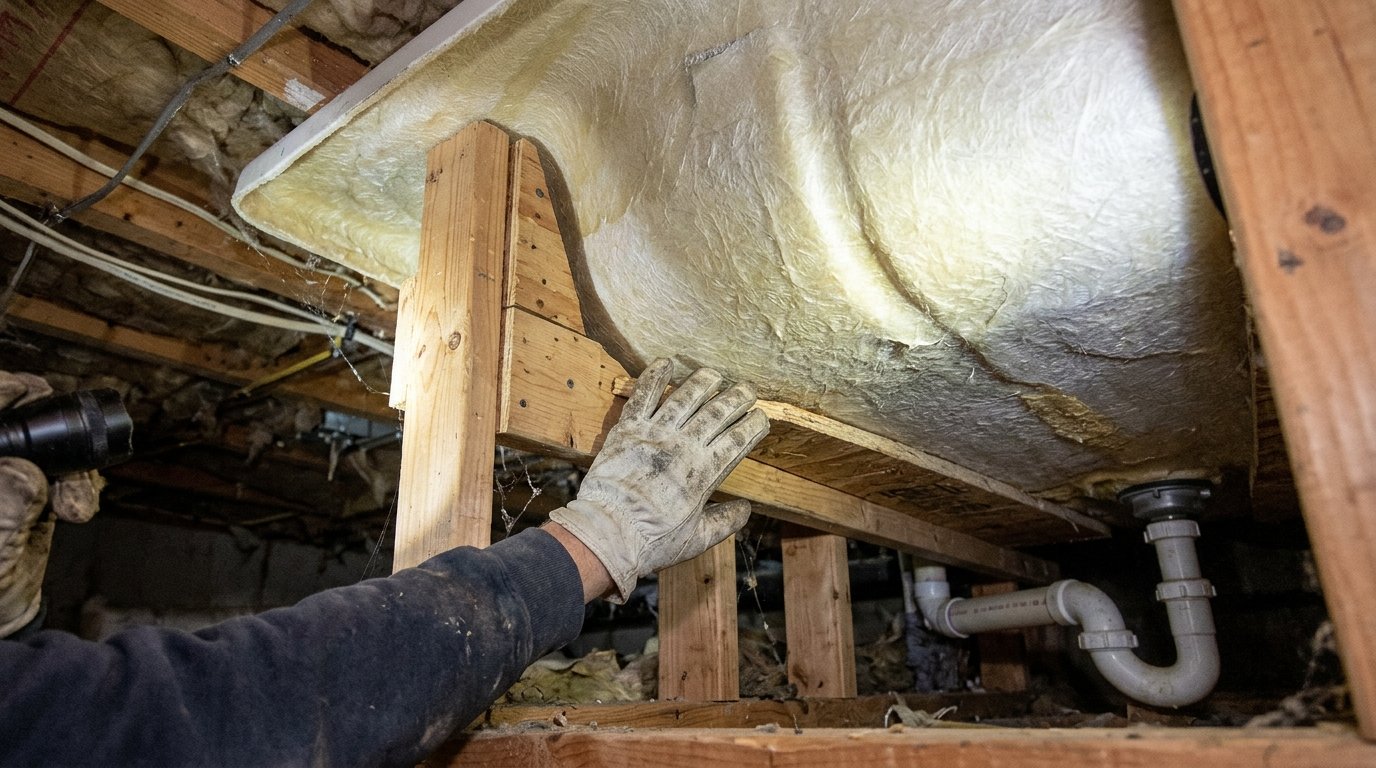
Accessible panels, adjoining walls and ceilings below can reveal moisture or failing fasteners. Do not open building materials without understanding plumbing and electrical hazards. Consider how this looks in an ordinary bathroom rather than on a product label. The surface may appear uniform from a doorway while the relevant evidence is concentrated near a fitting, seam or damaged edge. Take the time to observe the whole area before making the surface harder to inspect.
A repair can be cosmetically acceptable without being invisible. Ask whether the aim is to remove a sharp edge, prevent water contact with a damaged substrate, or blend the appearance. Keep the observations specific rather than using labels such as “bad” or “fine.” Note depth if apparent, exact location, whether water appears, and whether the problem changes over days or weeks.
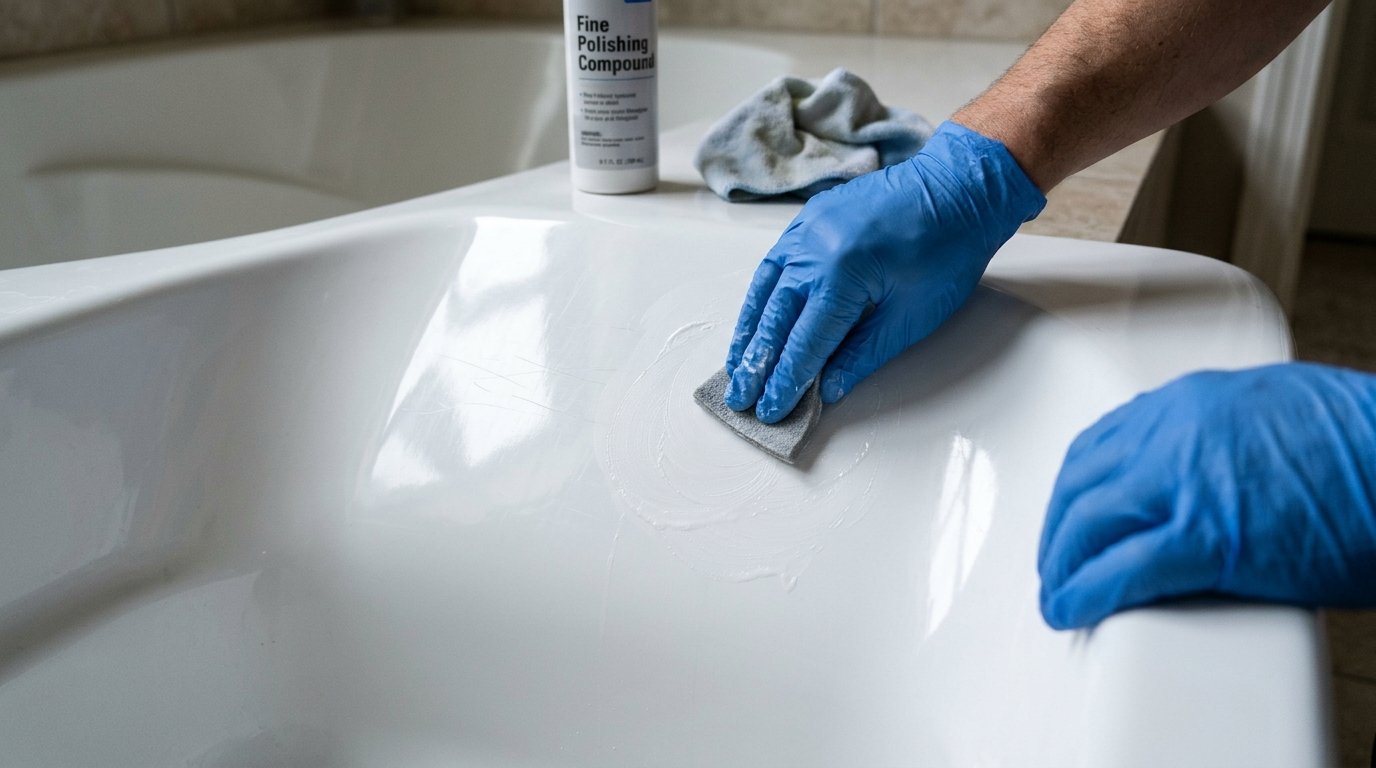
Allow the specified cure time before using or cleaning a repaired section. Early contact with water or household products can compromise a patch even when it looks hard and glossy.
A useful companion to this question is our guide to Repairing a Small Chip in a Porcelain Bathtub Surface, which examines a related decision from a different starting point.
Compare defects across bathtub materials
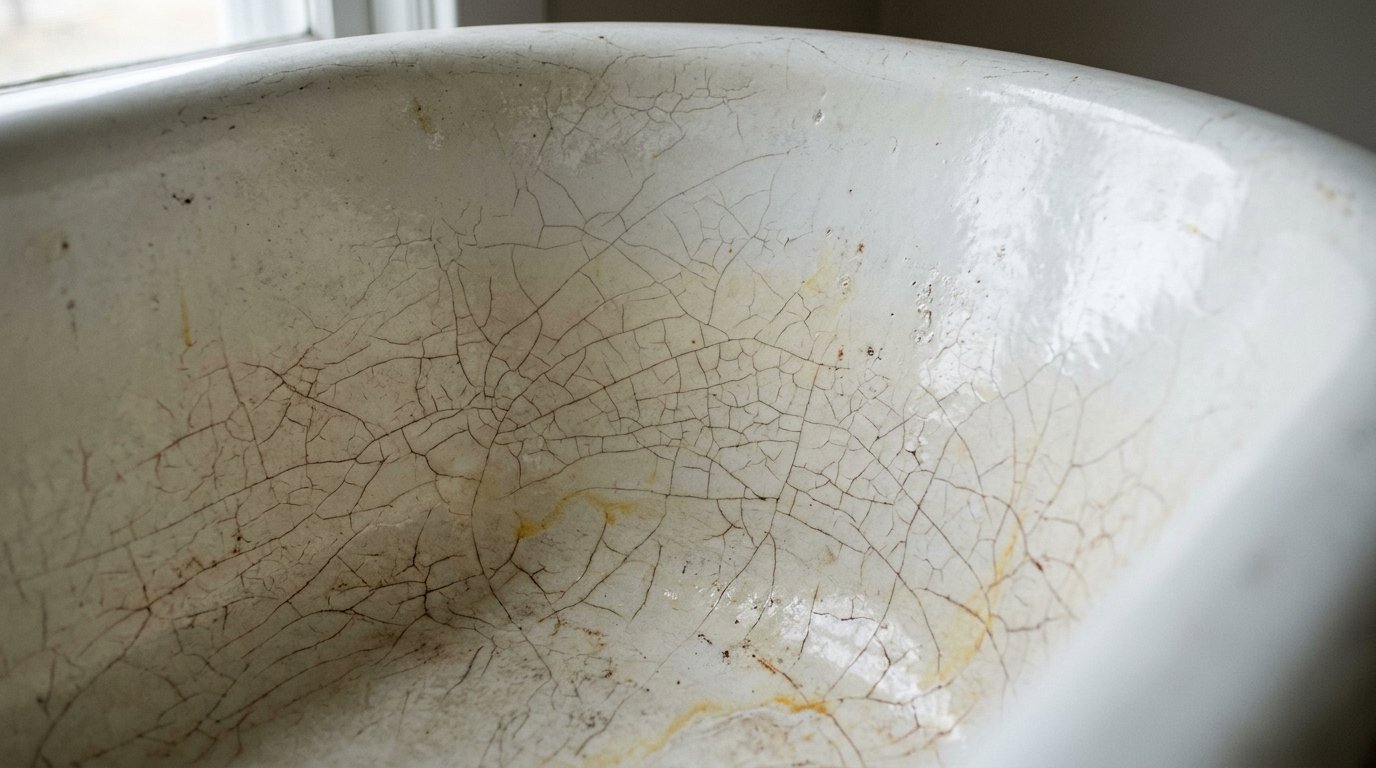
Crazed enamel, cracked gelcoat, flexible acrylic and corrosion in steel have different implications. A diagnosis that ignores the base material can mislead. Think about the work after the first application as well. Drying, curing, cleaning restrictions and future access may affect whether an approach is practical. A quick fix is less convenient when it needs to be repeated after the next few baths.
Small repairs are most successful when they solve a clearly bounded defect on a sound surface. Larger patches introduce more edge area, more color matching, and more opportunity for future movement. Ask a technician to explain the observation that supports the diagnosis. “It looks worn” is less informative than a description of adhesion, substrate condition, drain movement or a particular leak path. The explanation should fit the visible evidence.
A proposal should state the limits of the work. Cosmetic repairs are not a guarantee against hidden water damage, and resurfacing does not make a flexing or unstable tub structurally secure.
Record a useful condition report
Take close and wide photos, note position, width and whether the area changes. Those details help a technician distinguish deterioration from isolated impact damage. The location of a problem often changes the stakes. A mark at an edge or fitting may encounter water more often, while a floor defect may be loaded by body weight. That exposure should shape both the urgency of the repair and the method used.
The tub material changes the meaning of damage: rigid porcelain enamel chips differently from acrylic, while reinforced fiberglass can hide a deeper fracture below a gelcoat-like finish. Use the least destructive observation available. Look for edges lifting, staining around fixtures, changes in surface texture and accessible damp spots. Leave hidden pipe disassembly and cutting to people equipped to manage the risks.
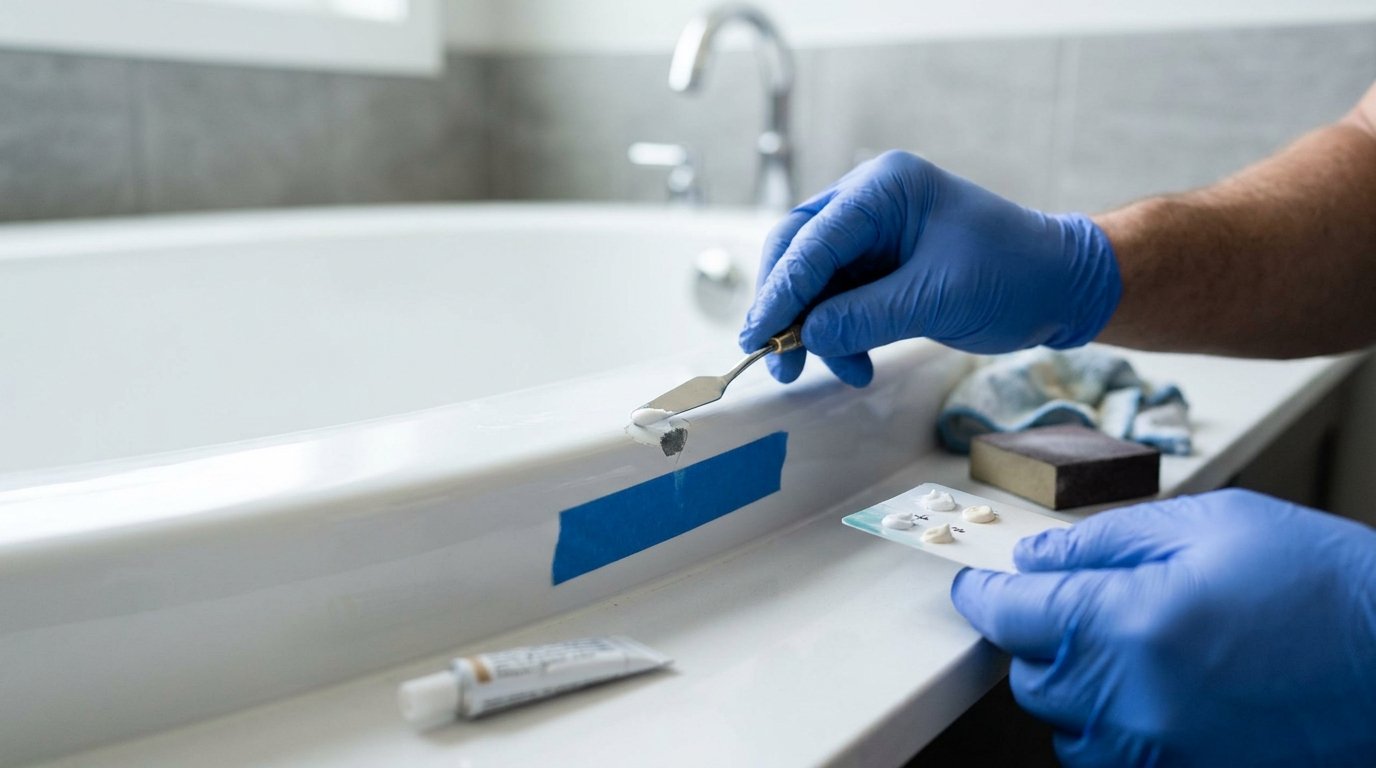
If the surrounding material is sound and the issue is truly localized, a compatible minor repair may be reasonable. If there is spreading damage, repeated failure or moisture below the bath, seek an assessment before covering it.
Use a decision threshold instead of guessing
If the tub leaks, flexes unusually or presents sharp broken material, stop use and seek qualified help. Stable shallow wear may be appropriate for simple cosmetic care. It helps to separate the visible result from the cause. A smooth patch may look finished, but if movement, contamination or moisture remains, the problem can return. An effective plan explains both the cosmetic treatment and the condition supporting it.
Not every apparent flaw calls for a filler. Mineral deposits and scuff transfer can mimic damaged coating; a gentle cleaning check can prevent irreversible work on an intact finish. Try to distinguish an isolated blemish from a pattern. Several similar defects, recurring moisture or worsening edges make a stronger case for a broader assessment than one stable mark.
Where an inspection finds multiple causes, plan the work in order: address active leakage and instability, dry affected materials, then restore the visible finish. Reversing the order hides evidence.
Applied to “surface appearance alone can mislead,” this means looking for a genuine change in condition rather than only a change in color. A narrow scratch is often cosmetic, but a small line in a heavily loaded area may signal more. Assess texture, location and change over time together. In practical terms, compare the nearby undamaged finish with the affected area, and observe whether the situation stays stable after the space is dry. Do not treat the absence of an obvious drip as proof that a hidden joint or substrate is sound. If a recommendation involves new chemicals, abrasion or removal of fittings, verify that it is suitable for the actual tub and within the intended scope of the product or technician. The goal is an informed decision, not an elaborate experiment on an unknown finish.
For this particular question, the most useful outcome is a clear distinction between what can safely be checked and what needs skilled attention. Start with the surface and history you actually have, keep water away from suspected leaks, and use only materials approved for the existing finish. If the evidence points to a moving crack, hidden moisture, corrosion or widespread coating failure, a professional diagnosis is worth more than a hurried cosmetic result. Record any work completed, respect the specified cure time and use a gentle maintenance routine afterward.