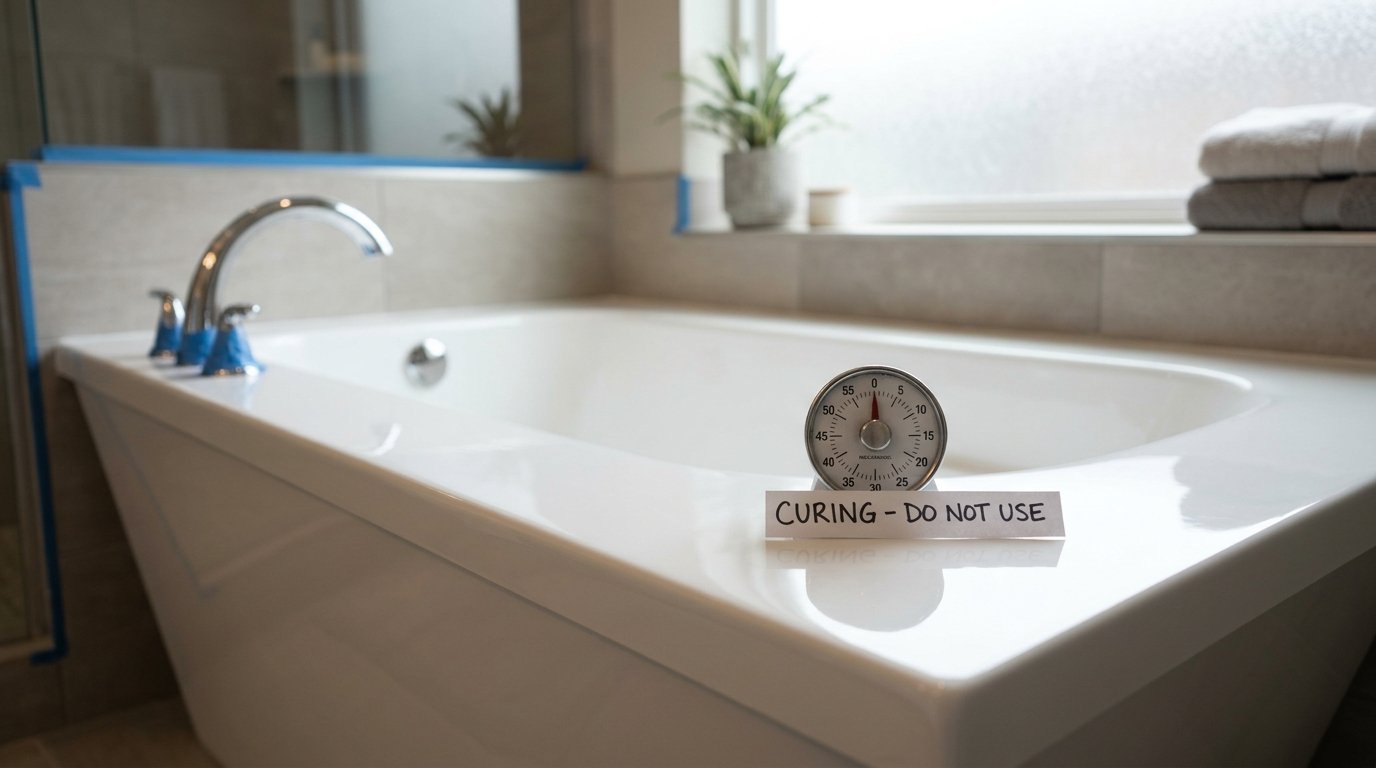
A freshly coated bathtub can look glossy long before it is ready for water. The correct waiting period comes from the particular product and conditions of the job, not a universal rule.
For how long to wait before using a refinished bathtub, a sensible plan begins by identifying the existing surface, the condition of the area around the defect and any sign that water is reaching places it should not. This guide explains what can be assessed without damaging the tub, the limits of common treatments, and the questions worth asking before paying for work. Product-specific instructions and an on-site assessment take priority when a coating, fitting or structure is uncertain.
Curing and drying are not the same
A coating may feel dry before it reaches sufficient service hardness. Follow the exact product’s specified return-to-use period rather than assuming one universal number. The correct boundary of a project is not always the outline of the visible spot. Damage can extend beneath a finish or into a hidden joint, while some apparent marks are only deposits on top. That difference is the reason inspection comes before treatment.
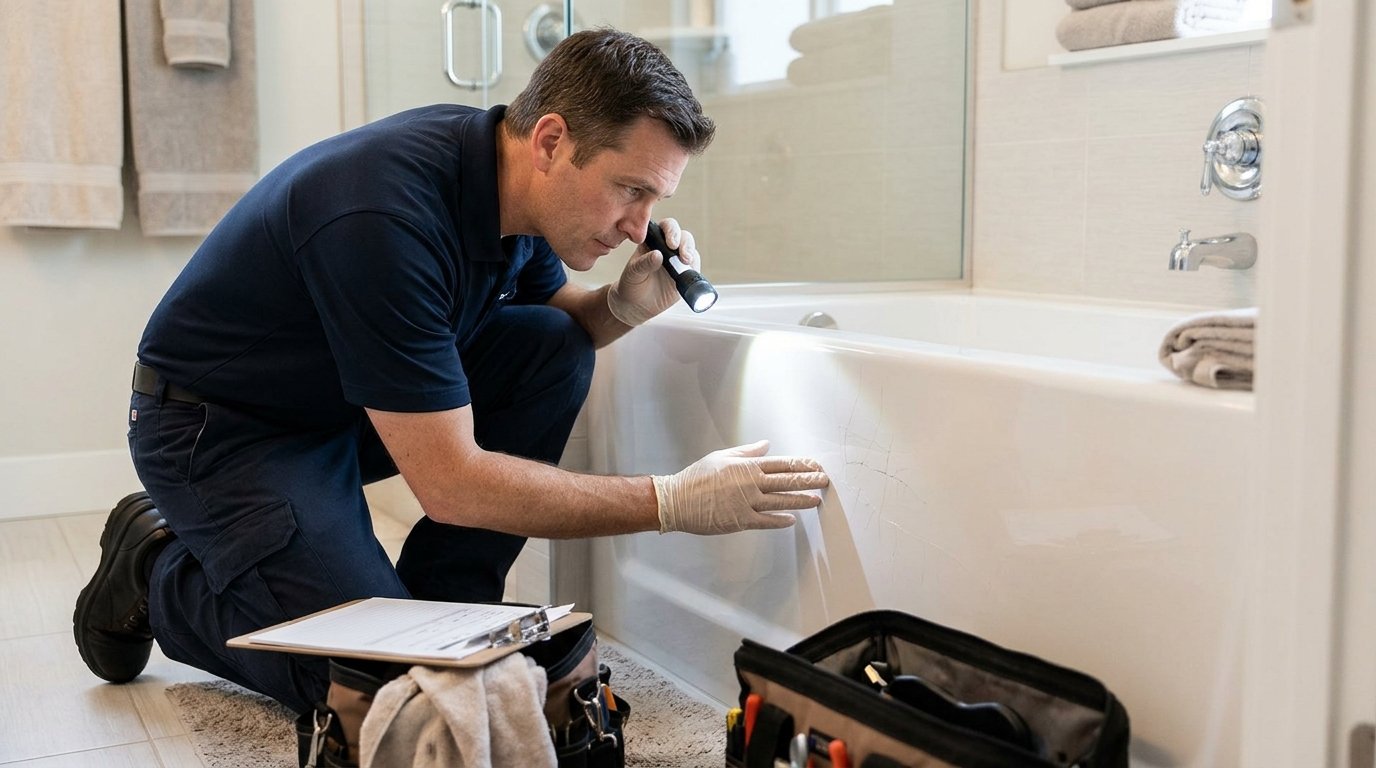
A well-written proposal separates preparation, repairs, coating and post-job care. It should not treat the visual gloss of the finished surface as the only measure of success. For a useful inspection, photograph the area both close up and from farther back. Note whether the observation changes after a normal cleaning, after the tub is dry or when the fixture has been used. Avoid deliberately stressing a suspected crack or leak.
If the surrounding material is sound and the issue is truly localized, a compatible minor repair may be reasonable. If there is spreading damage, repeated failure or moisture below the bath, seek an assessment before covering it.
Why cure times differ among jobs
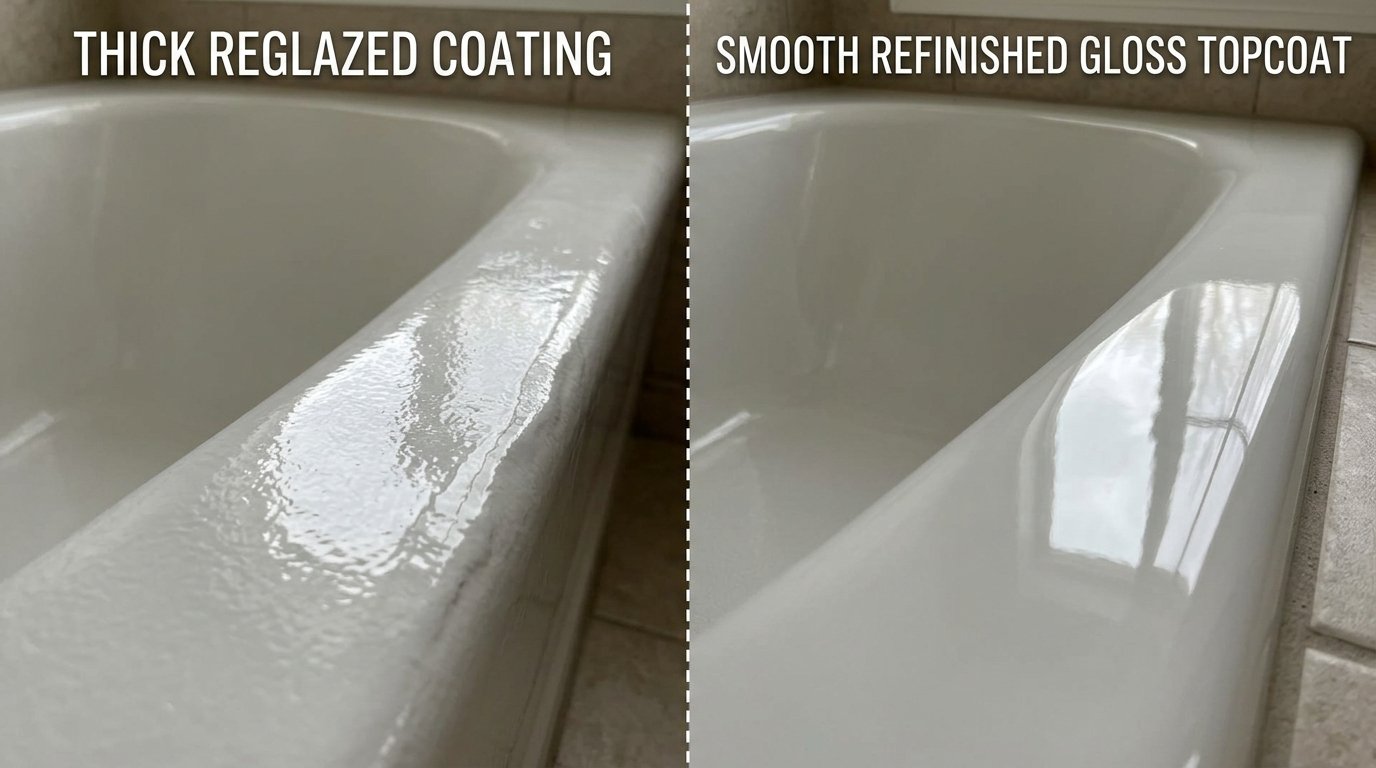
Coating chemistry, temperature, humidity, film thickness and ventilation all affect cure. A contractor’s written instructions take precedence over generic estimates. A realistic result has limits. Color can be blended without being perfectly invisible; a water test can indicate an immediate repair without guaranteeing indefinite performance. Document the condition and keep the maintenance instructions.
Curing is a real performance requirement, not an optional courtesy. The time to first use, time to clean, and time to reinstall accessories can differ by product and job conditions. Check the manufacturer’s care instructions and any previous refinishing paperwork. Restrictions about abrasives, solvents, heat or immersion may be specific to the finish rather than to bathtubs generally.
Where an inspection finds multiple causes, plan the work in order: address active leakage and instability, dry affected materials, then restore the visible finish. Reversing the order hides evidence.
The first hours after application
Avoid touching the coating, letting dust settle on it or running water. Keep pets and children out according to the professional’s safety guidance. Small clues become more persuasive when they agree. Location, texture, timing and the history of the tub each tell only part of the story. A single test or photograph should not outweigh signs that the surrounding material is deteriorating.
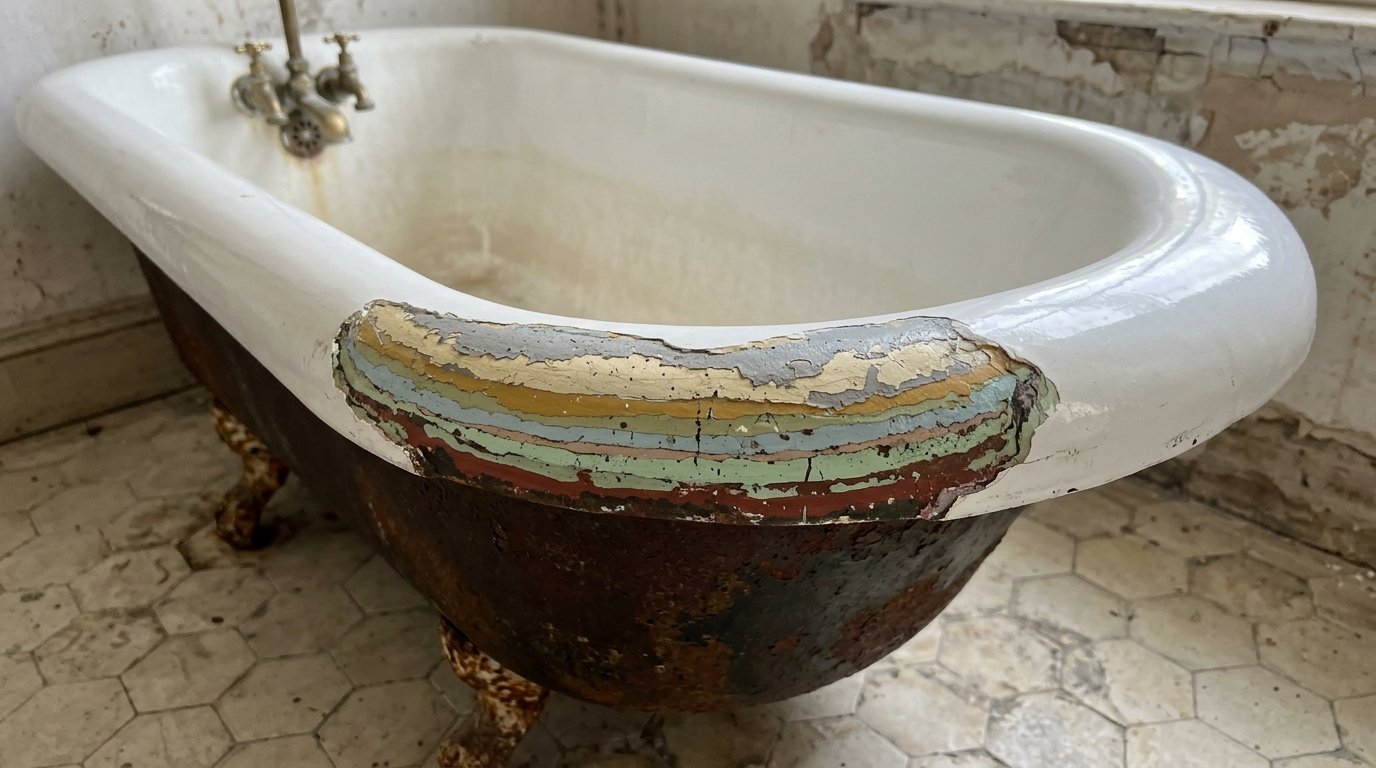
Coating adhesion depends on clean, stable underlying material. If loose layers remain, spraying a good product over them simply moves the weakest part of the system out of sight. A clear stop point is helpful: when you notice an active leak, movement under normal use, exposed sharp material or visible water damage, stop using the bath until the concern has been assessed.
Choose the method that preserves as much sound material as possible. Unnecessary scraping, sanding or chemical treatment can enlarge a modest repair and complicate later professional restoration.
Drains, fixtures and sealant create another timeline
Removed hardware and new caulk may have their own installation or curing requirements. The longest applicable restriction determines safe use. Material compatibility should not be treated as a footnote. Adhesion, hardness, flexibility and chemical tolerance vary, and a product that works well for one bathtub may cause damage on another. Check the maker’s guidance rather than assuming all white surfaces behave alike.
Bathroom refinishing is not ordinary household painting. Coatings, dust and stripping chemicals require suitable worker protection and engineered ventilation under the relevant safety instructions. Ask what would count as a successful repair. A smooth surface, a well-bonded coating, a dry surrounding wall and a stable tub are separate outcomes; not every technique promises all of them.
When an option promises to restore appearance quickly, ask whether it also addresses the actual cause. The answer determines whether the result is a durable repair or merely a temporary visual improvement.
A useful companion to this question is our guide to How Many Times Can You Refinish the Same Bathtub Safely?, which examines a related decision from a different starting point.
What early use can do to a finish
Premature water, suction mats or dropped bottles can leave marks or weaken adhesion. Damage is not always immediately visible. There is also a practical order to the decision. Establish what material is present, whether the bath is dry and secure, and what happened before the mark appeared. Only after that should a proposed cleaning, repair or professional process be judged.
A sound fixture is a better refinishing candidate than a moving or leaking one. No coating corrects an insecure installation, and water damage can continue unseen behind the renewed gloss. Before making changes, write down what you know: the age of the finish if documented, prior repairs, the exact location and any wetness nearby. Missing information is not a failure; it tells you where to look next.
Before accepting a quote, ask what it includes and how the final result will be checked. A well-defined scope reduces surprises and helps compare alternatives fairly.
Ask for a specific handover time
Request a written date and time after which showering or soaking is permitted, plus instructions for cleaning and re-entry following solvent use. A useful answer balances what you can see with what you cannot. A homeowner can document stains, movement, defects and timing, but hidden plumbing or laminate damage may need inspection tools and someone qualified to use them.
Homeowners should be cautious of chemical paint stripping in confined bathrooms. Authorities have documented fatal methylene-chloride exposures; ask for safer methods and qualified controls. If the choice involves a contractor, compare written descriptions of the proposed process. Ask how the work area will be protected, what would change the scope and when the tub may safely return to service.
The safest decision may be to delay cosmetic work until the area is dry and the fittings are sound. A successful finish is easier to achieve when water and movement problems are resolved first.
If the bath is still tacky or smells unusual
Do not use it simply because the calendar says it should be ready. Contact the service provider if conditions or curing appear abnormal. Consider how this looks in an ordinary bathroom rather than on a product label. The surface may appear uniform from a doorway while the relevant evidence is concentrated near a fitting, seam or damaged edge. Take the time to observe the whole area before making the surface harder to inspect.
The proposed surface system deserves a concrete explanation. Ask the contractor what is applied, why it suits this tub, and how the result differs from the original manufactured surface. Keep the observations specific rather than using labels such as “bad” or “fine.” Note depth if apparent, exact location, whether water appears, and whether the problem changes over days or weeks.
If there is uncertainty about the substrate or the repair chemistry, do not experiment with a stronger product. Manufacturer guidance or a specialist opinion is generally cheaper than correcting a preventable finish failure.
Applied to “curing and drying are not the same,” this means looking for a genuine change in condition rather than only a change in color. A coating may feel dry before it reaches sufficient service hardness. Follow the exact product’s specified return-to-use period rather than assuming one universal number. In practical terms, compare the nearby undamaged finish with the affected area, and observe whether the situation stays stable after the space is dry. Do not treat the absence of an obvious drip as proof that a hidden joint or substrate is sound. If a recommendation involves new chemicals, abrasion or removal of fittings, verify that it is suitable for the actual tub and within the intended scope of the product or technician. The goal is an informed decision, not an elaborate experiment on an unknown finish.
Applied to “why cure times differ among jobs,” this means looking for a genuine change in condition rather than only a change in color. Coating chemistry, temperature, humidity, film thickness and ventilation all affect cure. A contractor’s written instructions take precedence over generic estimates. In practical terms, compare the nearby undamaged finish with the affected area, and observe whether the situation stays stable after the space is dry. Do not treat the absence of an obvious drip as proof that a hidden joint or substrate is sound. If a recommendation involves new chemicals, abrasion or removal of fittings, verify that it is suitable for the actual tub and within the intended scope of the product or technician. The goal is an informed decision, not an elaborate experiment on an unknown finish.
For this particular question, the most useful outcome is a clear distinction between what can safely be checked and what needs skilled attention. Start with the surface and history you actually have, keep water away from suspected leaks, and use only materials approved for the existing finish. If the evidence points to a moving crack, hidden moisture, corrosion or widespread coating failure, a professional diagnosis is worth more than a hurried cosmetic result. Record any work completed, respect the specified cure time and use a gentle maintenance routine afterward.